
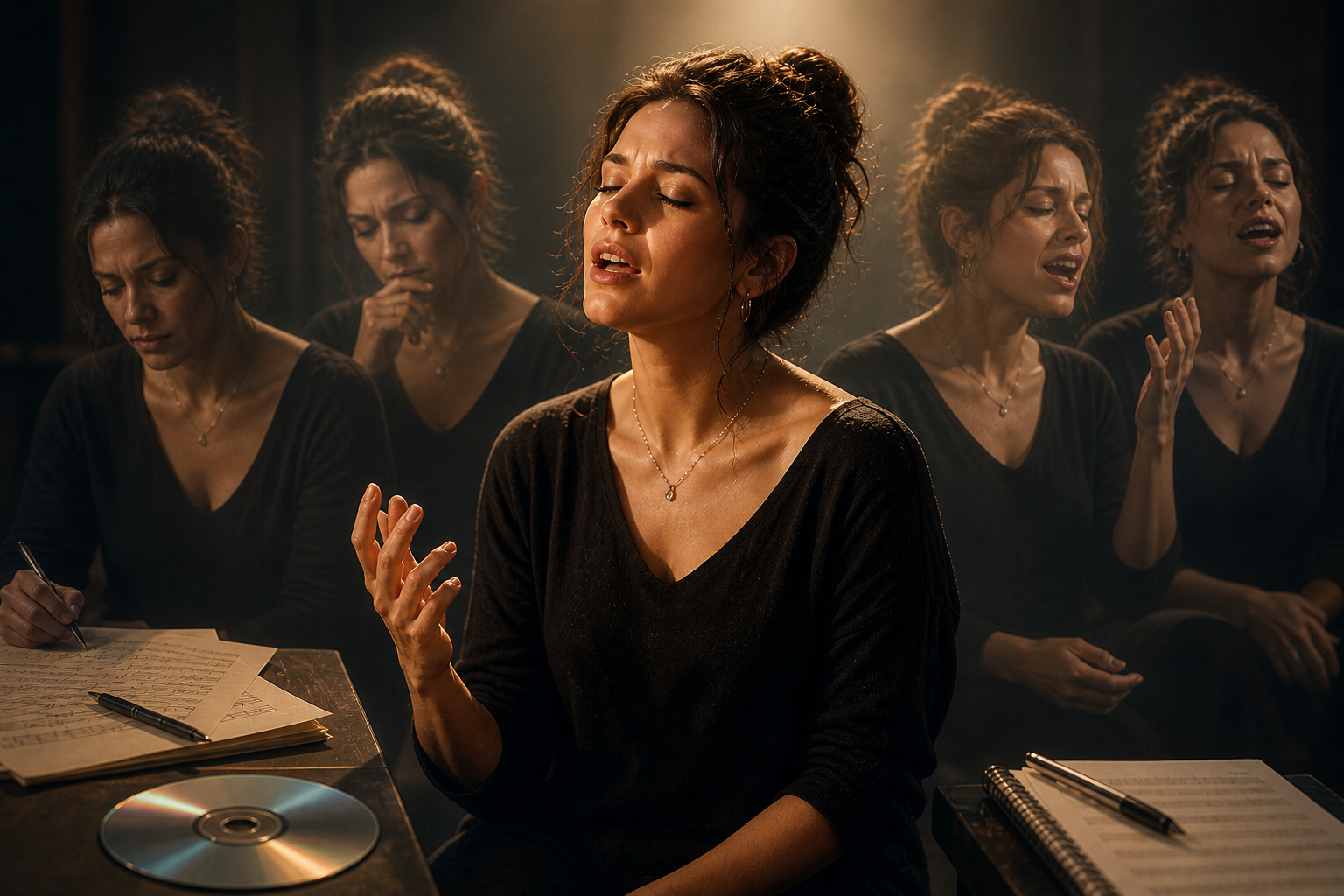
Most people don’t realize this, but many of the biggest solo artists in the world are not primarily the writers of the songs they record.
Artists like Whitney Houston, Adele, Ariana Grande, or Sam Smith are often interpreting songs written by professional songwriters. To the listener, the song belongs to the artist. But behind the scenes, that song usually began somewhere else — as a demo.
And that’s where something fascinating begins.
The Hidden Step Nobody Hears
Before a song ever reaches the public, it typically exists as a demo — recorded by the songwriter or a hired demo singer.
These demos are rarely heard outside the industry.
And if you did hear them, you’d often be surprised.
“If you were to listen to the demo, you would very often feel that it doesn’t sound exactly like the version the artist released.”
Because something crucial happens between the demo and the final recording:
The song evolves.
Where the Song Meets the Artist
When a singer chooses a song, they don’t just perform it.
They enter into a collaboration with it.
The original melody, phrasing, and structure — the bones of the song — are already there. But they’re not the final expression.
“The song has a way that it wants to be expressed… but that expression is also shaped by the stylistic tendencies of the artist.”
This is where artistry begins.
A great singer doesn’t ignore the song — they honor it. But they also bring themselves fully into it:
- Adjusting phrasing
- Shaping dynamics
- Adding or removing space
- Coloring emotional moments
- Introducing subtle riffs or variations
All of this is done in service of one goal:
To make the song feel true — both to the song itself and to the artist performing it.
A Collaborative Craft (Not a Solo Act)
This process rarely happens in isolation.
In a professional recording environment, interpretation is shaped by a team:
- The artist, bringing instinct and identity
- The producer, guiding feel, phrasing, and direction
- Sometimes engineers or management, helping align the performance with the artist’s brand
“It’s where the song and the artist meet and join together in union.”
That’s the moment a good song becomes a compelling performance.
Watching It Happen in Real Time
As a producer and songwriter, I’ve had a front-row seat to how songs evolve in the studio.
Recently, I had the chance to watch this process unfold in rehearsal with Rebeca.
We were working on songs that had already been written — strong songs with solid foundations.
But they weren’t finished yet.
“Here’s the basic skeleton of the song… now I am going to craft it, sculpt it, and express it through the lens of my own voice.”
As rehearsal progressed, I watched her:
- Shift phrasing to lift emotional moments
- Soften passages to create intimacy
- Add subtle inflections that changed the meaning of a line
- Let the song tell her what it needed
Nothing was random.
Everything served the song.
And everything brought it closer to something alive.
Why Copying the Original Doesn’t Work
This is where many singers go wrong.
They try to recreate the original version as closely as possible.
But that’s not artistry — that’s imitation.
“There already is one of that artist. No one is going anywhere trying to sing a song exactly the same way.”
Think about it this way:
If someone remade a film, but used the same actors delivering the same lines in the same way — what would be the point?
Music is no different.
A song only becomes meaningful again when it’s reinterpreted.
From Karaoke to Identity
This is why performances that sound like “karaoke” fall flat.
They may be technically correct — but they lack identity.
What audiences respond to is ownership.
“You want to begin to build a sense that yes, you’re doing familiar songs — but not the way the original artist did them.”
That’s what makes people remember you.
That’s what makes a performance feel real.
The Skill Most Singers Never Learn
The ability to interpret a song — to reshape it without losing its essence — is a skill.
And it’s one that most singers are never actually taught.
But it can be learned.
“There’s a massive opportunity to interpret the song… to grow it into something that marries with your own authentic voice.”
With the right guidance, singers can learn how to:
- Break apart phrasing and rebuild it
- Use rhythm and space intentionally
- Highlight emotional meaning in lyrics
- Develop a unique vocal identity within any song
If You Want to Learn This Skill
This kind of interpretation isn’t something most singers are ever shown how to do.
It’s not just about singing the notes — it’s about understanding how to shape a song so it becomes something personal, expressive, and alive.
“With the right guidance, you can learn how to take a song beyond imitation and turn it into something that truly sounds like you.”
That’s exactly the kind of work Rebeca does with singers.
Whether you’re working on your own material or reinterpreting songs you love, she helps you uncover how your voice naturally connects to the music — and how to express that with clarity and confidence.
If that’s something you’ve been looking for, it may be time to explore working together.
Guest perspective by David Randle, producer, songwriter, and collaborator with Rebeca Randle.