
People often ask a simple question:
“What is one thing I could start doing this week to improve my voice?”
The honest answer is simpler than most people expect.
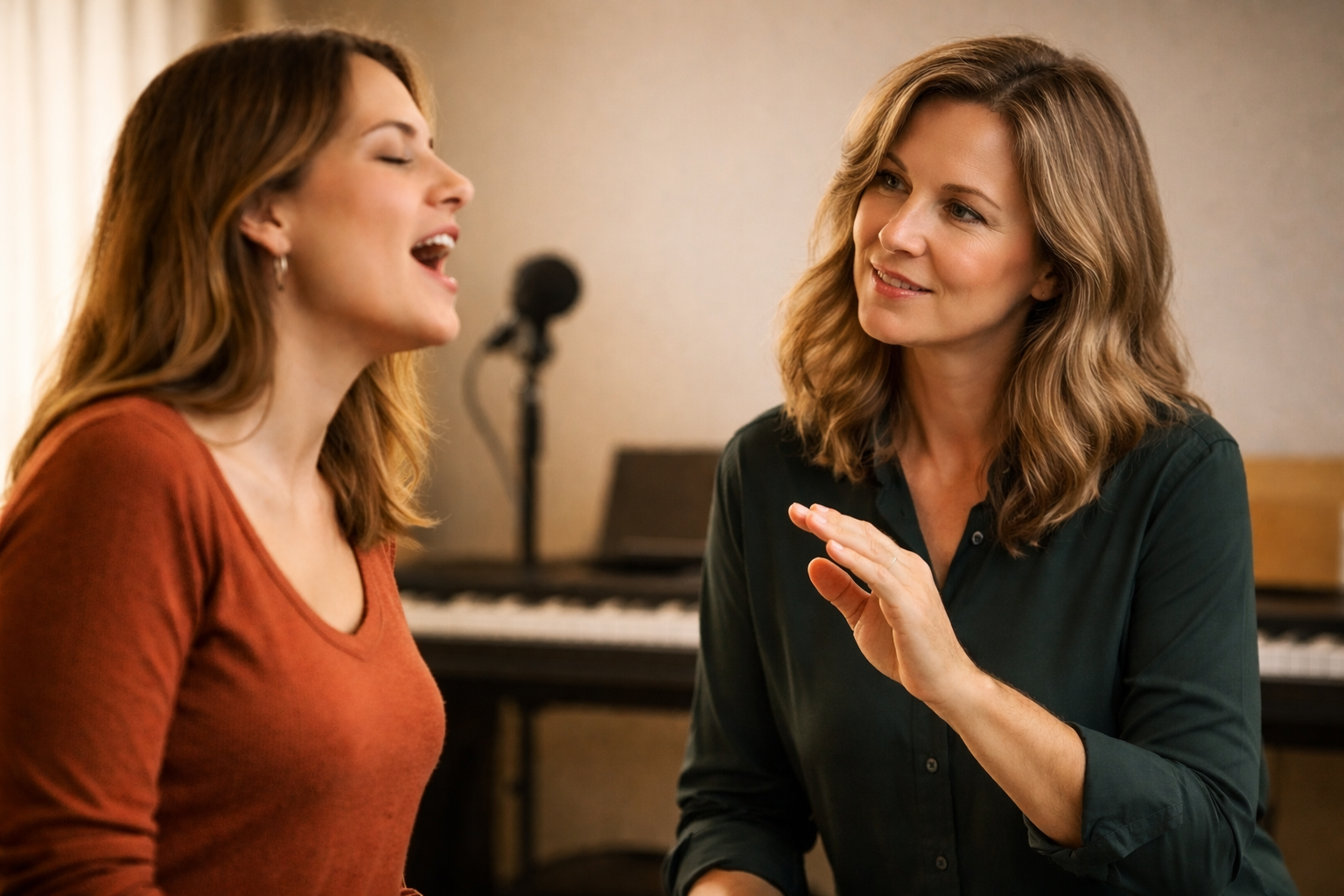
For most singers, the most effective step is working with a coach who can actually hear you sing.
That may sound obvious, but it addresses one of the biggest misunderstandings about vocal training.
Many singers try to improve using:
- online courses
- singing apps
- YouTube tutorials
- “sing-along” training programs
These resources can sometimes introduce useful ideas, but they all share the same limitation:
They can’t hear you.
Without feedback, singers often repeat habits that are actually causing the problems they’re trying to solve, often in areas like breath control or vocal placement.
Why Feedback Changes Everything
Imagine trying to become a great tennis player, golfer, or figure skater without ever having a coach watch what you’re doing.
In sports, that almost never happens.
Elite athletes rely on coaches because the coach can see things the athlete cannot see in themselves.
Singing works the same way.
A vocal coach listens carefully and helps the singer develop several key elements of technique, including:
- breathing
- timing
- vocal placement
- emotional connection to the song
- gesturing through physical expression while performing
These elements work together to build a strong, reliable voice.
But every singer arrives with different habits, strengths, and challenges. One person may need help with breath coordination. Another may struggle with placement. Someone else may need help connecting their registers (often referred to as “connected tone”) or developing stamina.
Because of that, there isn’t a single universal exercise that works for everyone.
The first step is always hearing the singer and understanding what their voice is actually doing.
Once that happens, the training can be tailored to the individual.
In many cases, the changes that follow can be dramatic — not because of a quick trick, but because the singer finally begins working on the right things for their voice.
If you’ve ever felt stuck in your singing, it’s rarely because you’re not working hard.
It’s usually because you haven’t yet been shown what your voice actually needs.
That’s why great vocal training isn’t built on random exercises. It’s built on understanding how the key elements of singing work together — from breath to tone to expression.
If you’d like to see how these pieces fit together, you can explore the full framework here:
→ The 5 Pillars of Great Singing